Why Anxiety Happens — A Modern Lens on the Seven Emotions
Mander Thiara
Anxiety often appears at moments of change: starting a new job, beginning college, meeting someone for the first time, or moving to a new place. These situations feel uncertain, and the brain reacts by scanning for possible risks. When the outcome is unclear, the body’s threat‑detection system switches on. Thoughts race, the heart beats faster, muscles tighten, and the stomach can feel unsettled.
From a modern perspective, this is a normal biological response to uncertainty. From a Classical Five Element perspective, it is also the movement of Qi reacting to emotional pressure. Chinese medicine describes this through the Seven Emotions — a framework that explains how emotional states influence the body.
Both systems are describing the same human experience, just in different languages.
How the Body Responds to the Unknown
When we step into something unfamiliar, the mind tries to predict what might happen. This can create:
Worry about performance
Fear of being judged
Doubts about coping
Physical signs like restlessness, sweating, or a racing heart
These reactions are not signs of weakness. They are signs that the body is preparing for the unknown.
In Chinese medicine, this is the movement of Qi responding to Fear, one of the Seven Emotions. Fear naturally causes Qi to sink and scatter, which explains why people feel unsteady, shaky, or “not themselves” when facing something new.
Why This Matters for the Seven Emotions
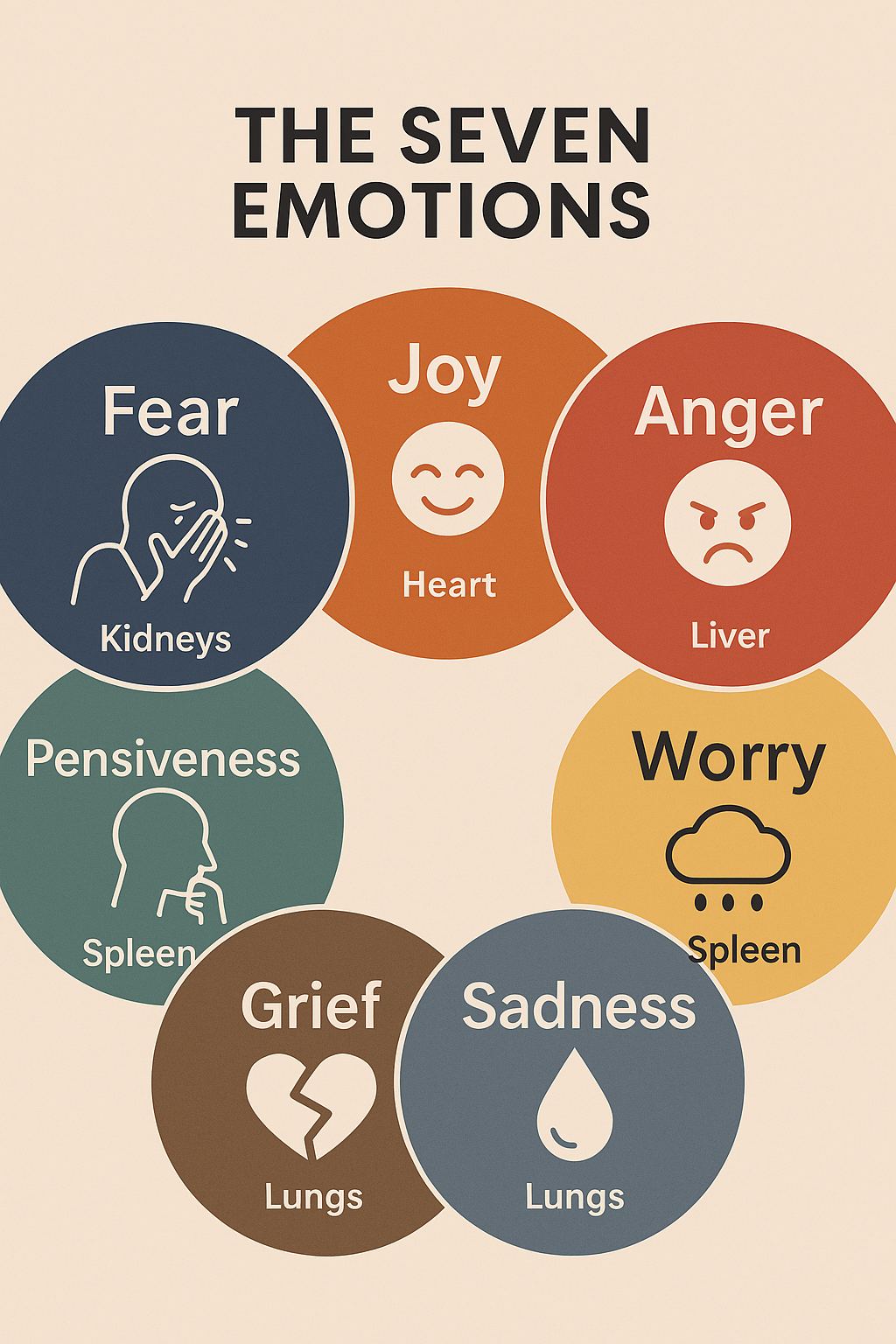
The Seven Emotions describe how emotional states affect the organs and the flow of Qi:
Fear affects the Kidneys
Joy/over‑stimulation affects the Heart
Anger/frustration affects the Liver
Worry affects the Spleen
Sadness/grief affects the Lungs
When we understand this, anxiety becomes easier to make sense of. It stops being a vague feeling and becomes a clear pattern the body is expressing.
This series will explore each emotion in turn, showing how ancient wisdom and modern psychology meet in everyday life.
When Anxiety Becomes Persistent
Most situational anxiety settles once we become familiar with the environment and feel more in control. But if stress continues, affects sleep, or causes ongoing physical symptoms, it’s important to seek support. Occupational health, your GP, or an employee assistance programme can offer guidance. Early support helps prevent burnout and protects long‑term wellbeing.
Acupuncture can sit alongside this support by helping regulate the movement of Qi, calm the nervous system, and restore balance.